





 Energy

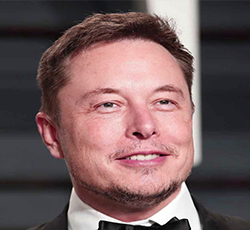
It's the biggest flotation in stock market history - and poised to make Elon Musk the world's first trillionaire. Now our financial experts reveal how a SpaceX investment could sky-rocket YOUR savings

It’s being billed as the biggest – and most anticipated – flotation in stock market history.
And it’s set to make founder Elon Musk the world’s first dollar trillionaire when his SpaceX venture goes public in the US next month.
Already the world’s richest person, the mercurial Musk this week lifted the lid on his rocket, satellite and artificial intelligence (AI) enterprise as he seeks to persuade money managers and retail investors to buy new shares in his futuristic firm while he stays in vice-like control.
If Musk, 54, gets his way – and few would bet against him – SpaceX would be valued at $1.75trillion, easily eclipsing the previous record for a new listing held by oil giant Saudi Aramco.
But Musk’s vaulting ambitions don’t end there.
Documents filed with regulators also reveal ambitious plans for space tourism, asteroid mining, cargo transport to the Moon and even a colony on Mars with at least one million people.
So should you climb on board and invest in what promises to be the investment ride of a lifetime – one that could either reach for the stars or crash and burn?
Details of Musk’s extraordinary plans are contained in the SpaceX prospectus – a warts-and-all legal document that spells out the opportunities and risks for potential investors.
Significantly, it begins with a quote from Musk himself outlining his messianic vision.
‘You want to wake up in the morning and think the future is going to be great – and that’s what being a space-faring civilisation is all about,’ he says.
‘It’s about believing in the future and thinking that the future will be better than the past. And I can’t think of anything more exciting than going out there and being among the stars.’
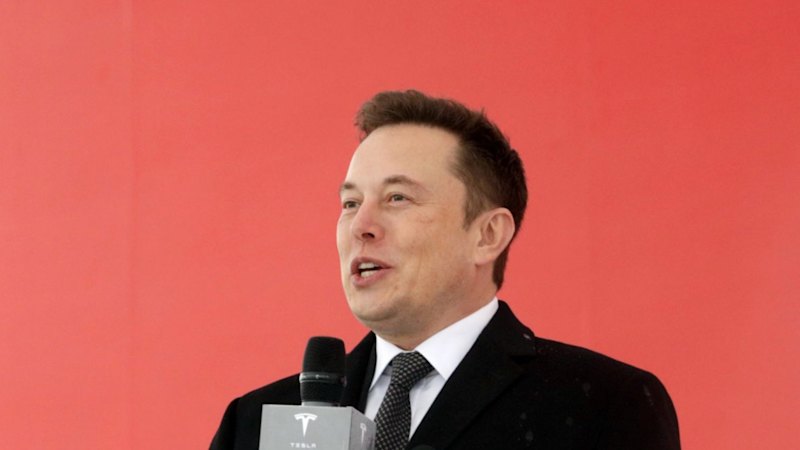
Elon Musk values SpaceX at at $1.75trillion, although others think this should be lower
A SpaceX Falcon 9 rocket launches from Cape Canaveral to deliver equipment and supplies to the International Space Station
The filing doesn’t yet say how much new money SpaceX wants, give a date for when the shares start trading or at what price the new shares will be valued.
These details will be revealed next month but analysts reckon Musk is seeking up to $75billion from outside investors to bankroll his extra-terrestrial dreams – or, as some might say, fantasies.
To raise such a huge amount involves telling an investment story like no other – and SpaceX doesn’t disappoint.
At times it borders on science fiction.
Musk believes relying on a ‘single planetary home... carries an existential risk’.
He says: ‘By moving beyond the only home we have ever known, we ensure species-level redundancy and the light of consciousness will not be tied to a single planet... We do not want humans to have to have the same fate as dinosaurs.’
SpaceX claims to have identified a potential market worth $28.5trn which is ‘the largest... in human history,’ according to the filing.
The sum is not far short of the entire annual output of the US economy – and for good measure this doesn’t even include opportunities that may arise with China or Russia.
‘We believe that space represents the largest economic frontier in human history,’ the filing states. ‘Our innovations and technological advancements are redefining industries on Earth, while we aim to create new ones on the Moon, Mars and beyond.’
What’s most surprising is that the vast majority of this potential revenue would come from its AI unit – a recently formed business that SpaceX admits ‘is still being fully integrated’, ‘operates in a rapidly evolving industry’ and is ‘subject to significant… risks’.
Founded in 2002, SpaceX is best known as a rocket company.
Since 2020 its Starlink internet-from-space business has seen almost 10,000 satellites launched by a fleet of reuseable rockets and spacecraft into low-earth orbit to cover the globe and substantially cut mobile ‘dead-zones’.
Starlink now has more than ten million subscribers in 163 countries.
In 2025 it generated income of $4.4billion – more than double the previous year – on sales 50pc higher at $11.4billion.
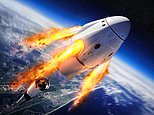
SpaceX has entered the space tourism industry with its Crew Dragon spacecraft
Since 2020 SpaceX's Starlink internet-from-space business has seen almost 10,000 satellites launched
These formed the bulk of SpaceX’s total revenues of $18.7billion last year.
Its space unit, which includes a contract with Nasa to re-supply the International Space Station, makes up most of the rest.
With the top line growing by around a third in each of the last two years, SpaceX is on track to become a $24billion turnover company by the end of this year.
But its big bet on AI has plunged SpaceX back into the red after making a $791million profit the previous year.
It made a net loss of $4.9billion last year after investing heavily in a sector where SpaceX lags market leaders such as OpenAI, Anthropic and Google, taking total accumulated losses to more than $41billion.
SpaceX recently bought xAI, Musk’s start-up best known for its ‘truth-seeking’ Grok chatbot, taking its total debts to $29billion.
AI already devours the lion’s share of spending on Space X’s networks, with almost $8billion gobbled up in the first three months of this year alone.
At least some of that will be recouped after Anthropic agreed to pay SpaceX $15billion a year between now and May 2029 to lease space in both of its flagship Colossus data centres that power the AI revolution.
Musk’s big idea is to relocate Earth-bound data centres into orbit where they will be powered by ‘the virtually limitless power of the Sun’ but cooled by the vast emptiness of space.
Orbital AI computer satellites are expected to be launched as early as 2028.
SpaceX recently bought xAI, Musk’s start-up best known for its ‘truth-seeking’ Grok chatbot, taking it total debts to $29billion
‘We have unmatched launch capabilities to enable deployment at scale,’ the prospectus contends, while admitting orbital AI compute ‘is an incredibly difficult technical challenge’.
It is not the only one.
The obligatory ‘risk factors’ section of the 277-page filing runs to 37 pages.
Warnings include: ‘Manufacturing, testing and launching rockets, satellites, and spacecraft, including our efforts to reuse rockets and spacecraft, involve inherent risks that could result in human injury or death.’
Or as Sir Richard Branson famously put it after his Virgin Galactic rocket crashed on a test flight over the Mojave desert, killing one of its pilots: ‘Space is hard.’
Perhaps the biggest risk factor is Musk himself.
Here, the prospectus pulls no punches.
‘We are highly dependent on the continued service and performance of Mr Musk, whose leadership, vision and expertise are critical to the development of our technologies and the execution of our business strategy. Mr Musk has been, and continues to be, a driving force behind our growth, innovation and operational success,’ it enthuses.
Please first to comment



Stay Connected
Tweets by elonmuskTo get the latest tweets please make sure you are logged in on X on this browser.