





 Energy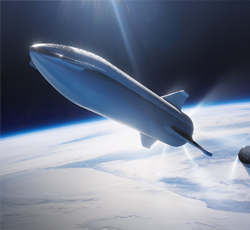




SpaceX? Racked up $23 billion in debt in 2025. Its xAI subsidiary, itself funded through loans, stands to repay $17.5 billion in debt.
Microsoft? While it has retained its “AAA” credit rating, its stock has tumbled 12% year to date, partly over spending concerns. The company, which is a prominent investor in OpenAI, recently restructuring its relationship in a way that reads in part like damage control, as the prospects of OpenAI’s profitability grow murkier. It is projecting $14 billion in losses this year alone. Meanwhile, Elon Musk is suing OpenAI, Sam Altman and Microsoft in federal court in Oakland, alleging they converted a once charity into an $800 billion for-profit company using his $38 million in donations.
Oracle’s focus on autonomous tooling is not new. A 2017 shot of its homepage shows its push into autonomous IT. [Adobe Stock]
Oracle? The firm is dealing with a 500% debt-to-equity ratio and analysts warning it could slip to junk status.
The theme extends to other companies in tech. Alphabet? Just sold a 100-year bond. Meta? Its stock price just slipped over concerns about its spending as the company moves from a historically debt-free balance sheet to actively tapping the bond market to fund aggressive expansion into AI.
In biopharma, the COVID hangover continues to plague companies like Moderna and, to a lesser extent, BioNTech. Moderna spent nearly twice as much on R&D as it earned in revenue in 2025, losing $2.8 billion on $1.9 billion in sales. BioNTech posted a €1.1 billion net loss while spending €2.1 billion on R&D against €2.9 billion in revenue, and projects its R&D costs will exceed its revenue again in 2026. Moderna also drew down a $1.5 billion term loan from Ares Management to extend its runway, targeting cash breakeven in 2028.
The problem extends beyond mRNA-focused biopharmas and Big Tech. The U.S. as a whole recently saw its national debt exceed 100% of GDP for the first time outside of World War II and the brief COVID crash. Total gross national debt is hovering around $39 trillion. The government is spending $1.33 for every dollar it collects.
China? Its debt-to-GDP ratio has quadrupled since the mid-1990s, from 22% to 94%, and the IMF projects it will cross 111% by 2029. The world’s second-largest R&D spender is leveraging up faster than any other major economy. There have been tangible cuts with science agencies absorbing disproportionate hits. The NSF has lost 35% of its staff since early 2025. Competitive NIH grants are running at half the rate of two years ago. The administration fired all 22 members of the National Science Board with no explanation. Thousands of already-approved grants have been rescinded or frozen.
The squeeze extends to the agencies that actually approve the drugs these companies are spending billions to develop. The FDA lost over 3,500 positions through layoffs and buyouts in 2025, part of a restructuring led by HHS Secretary Robert F. Kennedy Jr. The administration proposed cutting the agency’s budget to $6.8 billion from $7.2 billion in 2025.
The structural question
Private companies are borrowing at historic rates to fund AI infrastructure whose returns remain theoretical. But, some signals are emerging that an AI “bubble” might be too broad of a term for the current financial situation. That is, it seems more likely that part of what is happening is cannablization, where AI companies are siphoning off revenue from SaaS companies, for instance, while their own profitability is, in part, sabotaged by spiraling compute demands.
Pharma companies are spending more per drug while returns, outside of one therapeutic category, continue to erode. Automakers are layering autonomy R&D on top of electrification debt. The federal government is redirecting R&D dollars from civilian science to weapons systems. And AI, the technology that is supposed to make all of this more efficient, has so far driven costs up across every sector it touches.
The AI hyperscalers face a depreciation problem that few investors are discussing. The five major cloud companies plan to add roughly $2 trillion in AI-related assets to their balance sheets by 2030. AI hardware depreciates at approximately 20% per year, which means they face $400 billion in annual depreciation expense, more than their combined profits in 2025.
The pharma sector has a different version of the same math. Drug development costs have more than doubled since 2013, from $1.3 billion per asset to $2.67 billion, while the pipeline has actually shrunk.
And then there is the automotive industry, which is, by total debt, the most leveraged non-financial sector on the planet. Toyota carries $269 billion. Volkswagen holds $231 billion. Ford, $166 billion. GM, $131 billion. An important caveat: much of this debt belongs to captive finance arms like Ford Credit and Toyota Financial Services, which borrow at institutional rates to provide loans and leases to consumers and dealers. That makes automaker debt structurally different from a company like Oracle borrowing to build data centers. But the captive finance model is itself under pressure: Americans now owe over $1.66 trillion in auto loan debt, with average new car interest rates hitting 9.68% in 2025 and 90-day delinquency rates climbing toward historic peaks. On top of that existing debt structure, legacy automakers are now layering the capital costs of electrification and autonomy R&D: retooling factories for EVs, developing battery technology, and funding self-driving software programs simultaneously.
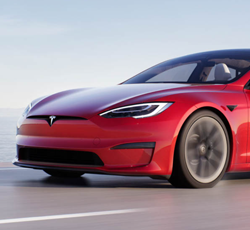
The exception is Tesla, which is making arguably the riskiest R&D bets of any automaker (robotaxis without steering wheels, humanoid robots for factory labor) while sitting on a fortress balance sheet: $44 billion in cash, virtually zero recourse debt, and positive free cash flow. Tesla also never built a captive lending operation at the scale of its legacy competitors, which means it avoided the structural debt that comes with being both a manufacturer and a bank.
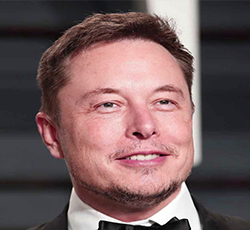
Elon Musk, in other words, is funding Tesla’s moonshots (including its autonomous cab push) from cash while funding xAI’s moonshots from debt. And at SpaceX, where the $23 billion debt load is being refinanced ahead of what could be the largest IPO in history, the stated long-term goal remains interplanetary colonization. That is a literal Mars-shot, financed with a bridge loan.
The sovereign debt picture mirrors the corporate picture. The U.S. government is now spending $1.33 for every dollar it collects in revenue. The deficit for this fiscal year is projected at $1.9 trillion. Interest on the national debt exceeded defense spending in fiscal year 2024, and now makes up 14% of all federal spending: over one in seven federal dollars goes to debt service.
But zoom out further, and the pattern is global. IMF data shows that the G7 economies collectively sit at roughly 127% debt-to-GDP, projected to climb to 131% by 2029. Japan remains the most indebted major economy at 249%. Italy is at 139%. France is at 115% and rising. The UK crossed 100% last year. Germany is the lone outlier among major Western economies, having brought its ratio down from 80% in 2010 to around 62% today, though that fiscal discipline has come at the cost of chronic underinvestment in infrastructure and defense.
As alluded to earlier, China is no exception to the debt picture. In 1995, its gross debt was just 22% of GDP. By 2024, that figure had crossed 90%, and the IMF projects it will reach 111% by 2029. The world’s second-largest R&D spender, racing to build domestic semiconductor capacity, expand its AI ecosystem, and challenge Western pharma with its own biotech pipeline, is leveraging up faster than any other major economy. Every major innovation economy except Germany is now borrowing more, not less, to fund the future.
Tell Us What You Think! Cancel reply
You must be logged in to post a comment.
Please first to comment


Stay Connected
Tweets by elonmuskTo get the latest tweets please make sure you are logged in on X on this browser.