






 Energy


Musk Escalates Dispute with South Africa Over Telecom Rules, Alleges Bribery in Starlink Licensing Row


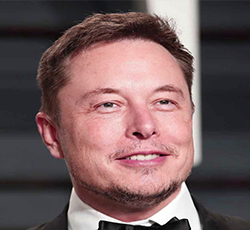
The Tesla CEO is worth a tremendous $450 billion. Getty Images—Andrew Harnik
Elon Musk has intensified his criticism of South Africa’s telecommunications regulatory framework, alleging corruption and discriminatory policies in an ongoing dispute over the licensing of Starlink, according to Business Insider Africa.
The billionaire entrepreneur, who heads SpaceX, claims that his satellite internet service, Starlink, has been unable to secure approval to operate in South Africa due to stringent local ownership requirements tied to race-based economic policies.
In a series of posts on X, Musk alleged that the company had been approached with proposals to circumvent these requirements through misrepresentation or illicit payments.
“We were offered many times the opportunity to bribe our way to a licence, but I have refused to do so on principle,” Musk said, adding that regulatory conditions in the country effectively exclude firms that do not meet specific racial ownership thresholds.
Regulatory tensions intensify
At the centre of the dispute is South Africa’s Broad-Based Black Economic Empowerment (B-BBEE) framework, a policy designed to increase the participation of historically disadvantaged groups in the economy. The rules often require foreign companies to partner locally or meet minimum ownership quotas to obtain operating licences.
Musk argues that these provisions are exclusionary and risk deterring foreign direct investment, particularly in high-impact sectors such as telecommunications and digital infrastructure.
His remarks have reignited a broader policy debate over the balance between economic transformation and investment competitiveness in Africa’s most industrialised economy.
Market access challenges for Starlink
Despite its rapid expansion across several African markets, Starlink has yet to secure full regulatory approval in South Africa, one of the continent’s largest and most lucrative telecommunications markets.
Industry analysts say the delay reflects deeper structural tensions between global technology firms seeking market access and domestic regulatory frameworks aimed at redressing historical inequalities.
“South Africa presents a complex regulatory environment where policy objectives extend beyond market liberalisation,” a regional telecoms analyst noted. “Compliance with empowerment laws is non-negotiable, but it can also create friction with multinational operators.”
Government stance unchanged
South African authorities have not formally responded to Musk’s latest allegations. However, officials have consistently maintained that all companies—local and foreign—must comply with national legislation, including B-BBEE requirements, as a condition for operating within the country.
The government has defended the policy as a necessary instrument for addressing entrenched economic disparities rooted in apartheid-era exclusion.
Investor sentiment under scrutiny
The dispute comes at a time when South Africa is seeking to attract greater investment into its digital economy, including broadband infrastructure and next-generation connectivity solutions.
Musk’s allegations—if substantiated—could raise concerns among international investors regarding regulatory transparency and governance standards. However, analysts caution that the broader investment climate will ultimately depend on policy clarity, enforcement consistency, and constructive engagement between regulators and private sector players.
For now, the standoff underscores the growing friction between global tech expansion and national policy frameworks, with Starlink’s South African ambitions remaining in regulatory limbo.
Share this:
Please first to comment



Stay Connected
Tweets by elonmuskTo get the latest tweets please make sure you are logged in on X on this browser.