

 Energy





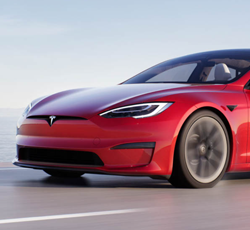
© 2025 Tesla Model Y RWD in Midnight Silver Metallic, front right (BY-SA 4.0) by Ethan Llamas
Tesla’s (NASDAQ: TSLA) stock reacted poorly to its first-quarter sales count. It fell short of expectations for some. The big EV company produced 408,383 and delivered 358,023. People wondered what the difference was. Tesla has a big and perhaps troubling backlog. Deliveries improved 6% from a year ago, when Tesla reported 336,681. That is a little miracle.
A year ago, the federal government had a $7,500 tax credit on EV sales. When they disappeared on September 30 of last year, fourth-quarter EV sales and early 2027 EV sales were supposed to crater. Tesla did not this year. So, it proved the industry’s primary EV sales assumption was wrong.
Tesla’s steady sales also indicate it has a chance to gain market share as major manufacturers exit the business. Although GM (NYSE: GM) and Ford (NYSE: F) were bigger companies, neither reached a 10% market share. Tesla dropped to 50% in the US late last year. Its first-quarter figures indicate it is well-positioned to regain that market share. Tesla’s chances have almost completely changed if EV demand is strong in 2026.
Most of Tesla’s deliveries came before oil moved over $100 and gas $4. Each appears to be on an upward trajectory. Maybe not today, but if gas stays high, EVs will become an important alternative. With Tesla’s market share, it has as good a chance as any company to benefit.’
Finally, what does not show up in Tesla’s numbers, but is just in the offing. China EVs won’t make it into the US, perhaps for years, because of tariffs. Tesla won’t have the market to itself, but it will be close
CEO Elon Musk says Tesla really isn’t a car company anymore. Wall St.’s reaction to the Q1 production and deliveries says otherwise.
About the Author
Please first to comment


Stay Connected
Tweets by elonmuskTo get the latest tweets please make sure you are logged in on X on this browser.