





 Energy




Wed 13 May 2026 08.38 EDT
First published on Wed 13 May 2026 00.01 EDT
Share Workers prepare the Temple of Heaven for Trump’s visit.
Photograph: Kevin Frayer/Getty Images
Chinese officials have publicly called for stability while carefully avoiding overt alignment with Washington. The foreign minister, Wang Yi, last week hosted his Iranian counterpart, Abbas Araghchi, in Beijing, and defended Iran’s right to develop civilian nuclear energy.
Xi has also offered implicit criticism of the US over the war. He has said safeguarding international rule of law is paramount and “must not be selectively applied or disregarded”, nor should the world be allowed to revert “to the law of the jungle”.
Still, neither side appears eager to allow the Iran crisis to derail broader diplomatic and economic engagement in the first of four potential meetings between Trump and Xi over the next year.
View image in fullscreen
The Chinese foreign minister, Wang Yi (right) hosted the Iranian foreign minister, Abbas Araghchi, in Beijing last week.
Photograph: Iranian Foreign Ministry/UPI/Shutterstock
The two countries remain locked in a fragile tariff truce reached last autumn after tensions threatened to erupt into a full-scale trade war. Trump has long complained about China’s trade surplus with the US, while Beijing has bristled at American export controls and sanctions.
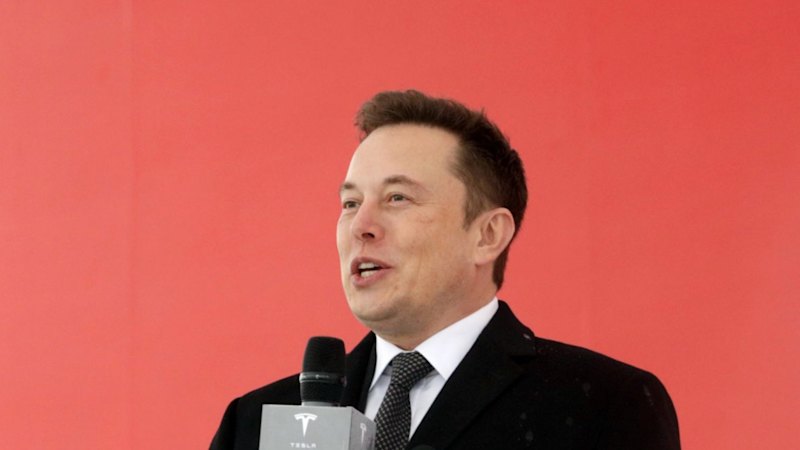
White House officials said Trump would travel with a delegation of more than a dozen US business leaders, including Musk and Cook, in a sign that both governments still seek economic cooperation despite strategic rivalry.
A sale of 500 Boeing 737 Max jets, one of the biggest orders in the aeroplane-maker’s history, will be announced during the trip, the Bloomberg news agency reported. Trump and Xi will also discuss creating a new board of trade to manage what China should buy from the US and vice versa.
Beijing, too, has reasons to avoid escalation. China’s economy remains burdened by sluggish domestic demand and a prolonged property crisis, while the closure of the strait of Hormuz has exposed its heavy dependence on Middle Eastern energy supplies.
Trump’s trip will be closely scrutinised in Taiwan for any sign of weakening US support. On Monday, he said he would speak to Xi about US arms sales to Taiwan, a departure from historic US insistence that it would not consult Beijing on its support to the island.
View image in fullscreen
Xi Jinping and Donald Trump inspect an honour guard at a welcome ceremony at the Great Hall of the People in Beijing in November 2017.
Photograph: Andy Wong/AP
He also insisted that his personal relationship with Xi would prevent a Chinese invasion of the island. “I think we’ll be fine,” he said. “I have a very good relationship with President Xi. He knows I don’t want that to happen.”
Another potential focus will be AI, with both countries facing calls to cooperate on global standards and safeguards. Bernie Sanders, an independent US senator, urged Trump and Xi to agree on allowing top scientists to share technical information and develop “AI redlines” about dangerous behaviour.
Sanders said: “At the height of the cold war, Reagan and Gorbachev found a way to negotiate nuclear arms control. The existential risk posed by AI demands nothing less from Trump and Xi.”
In Beijing, security was visibly tightened ahead of the visit, with police stationed at major intersections and checks increased on the metro system.
The summit itinerary includes a formal welcome ceremony, private meetings between the two leaders and a tour of the Temple of Heaven – a religious complex dating to the 15th century symbolising the relationship between Earth and heaven. Trump will attend a state banquet on Thursday evening and then have a tea and working lunch with Xi on Friday before leaving.
View image in fullscreen
The closure of the strait of Hormuz has exposed China’s heavy dependence on Middle Eastern energy supplies.
Photograph: Ismael Mohamad/UPI/Shutterstock
The US president, who has been criticised for emphasising foreign policy at the expense of domestic concerns in his second term, will be eager to project strength and present the trip as a victory.
Anna Kelly, the White House principal deputy press secretary, told reporters on a call on Sunday: “President Trump cares about results, not symbols. But even still, the president has a great relationship with President Xi, and the upcoming summit in Beijing will be both symbolically and substantively significant.”
But the US approach is likely to be pragmatic and transactional with little focus on structural reform. Scott Kennedy, a senior adviser in Chinese business and economics at the Center for Strategic and International Studies thinktank in Washington, said: “China and Xi Jinping come into this meeting in a much stronger place than the United States.
“China has goals that they would like: to extend the ceasefire, to reduce tech restrictions on the imports of semiconductors and lower tariffs. But even if they don’t get much on any of those things, as long as there’s not a blow up in the meeting and president Trump doesn’t go away and look to re-escalate, China basically comes out stronger.”
Explore more on these topics
Please first to comment

Stay Connected
Tweets by elonmuskTo get the latest tweets please make sure you are logged in on X on this browser.