





 Energy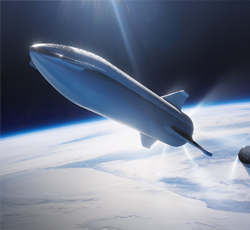



Email
Every Tesla earnings cycle has a point when the numbers are released, Wall Street lets out a sigh, and then they start debating what any of it actually means. The first quarter of 2026 was no exception. Gross margins and free cash flow exceeded analysts’ projections, and revenue reached $22.39 billion, up almost 16% year over year. Goldman Sachs kept its target at $375 with a neutral rating after noting the beat and describing the margin improvements in the energy and EV segments as “surprising.” In a nutshell, Tesla doesn’t always win easily, even when it does.
On May 1, the stock ended the day at $390.82, up more than 2%, continuing a run that has kept TSLA well above its 52-week low of $271. The above-average trading volume of 65 million shares indicates that the Q1 results actually shifted conviction in both directions. By practically all conventional measures, Tesla is still among the most expensive stocks in the S&P 500, with a market capitalization close to $1.5 trillion. At 358 times earnings, its trailing P/E is more than three times higher than its own five-year median. That necessitates a great deal of faith in the future for a company with earnings per share of $1.09.
The company’s own signals indicate that Robotaxi, Optimus, and a quickly growing energy storage company will follow. With Dallas and Houston designated as early robotaxi markets, Tesla started mass producing its Semi truck at the Nevada facility. An update on the deployment of Full Self-Driving is anticipated during the next earnings call. Waymo is already in operation in San Francisco and other cities, and analyst notes consistently bring up the discrepancy between Tesla’s timeline and Waymo’s operational reality. Whether Tesla’s autonomous strategy will close that gap or continue to lag behind is still up in the air.
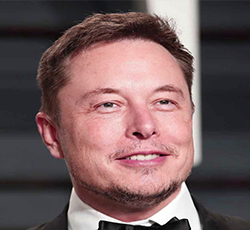
Right now, the SpaceX angle is giving the Tesla story an odd gravitational pull. Fund managers are openly discussing rotating out of large-cap tech, including TSLA, in order to build cash reserves for SpaceX allocations in light of reports of a massive SpaceX IPO that could value the company at $1.5 trillion. After a commentator pointed out that Elon Musk’s net worth had surpassed $800 billion, roughly matching John D. Rockefeller’s peak share of the U.S. GDP in 1913, Musk posted “-10T or bust” on X. Regardless of how one interprets the analogy, it serves as a reminder that Tesla’s stock has never been solely focused on automobiles. It has always been, at least in part, a wager on Musk as an individual.
The story of insider activity is a little more circumspect. Insiders have sold about $20.9 million worth of TSLA shares over the last three months; no purchases have been made during that time. That’s not a ringing endorsement, but it’s also not a fire alarm. It is not uncommon for insiders to sell into strength, but when a stock is already trading 37 percent above its estimated intrinsic value, the lack of any buying at current levels is the kind of detail that sticks with you.
According to CNN’s tally of 55 ratings, the analyst community is nearly evenly divided: roughly 44 percent buy, 42 percent hold, and 15 percent sell. For a $1.47 trillion company, that is out of the ordinary. A cleaner consensus is drawn to the majority of mega-caps. The split indicates real disagreement over whether the automotive core, which still generates the majority of revenue, can support the growth rates the market is implicitly assuming, or whether the bets on AI and robotics will pay off quickly enough to justify the stock’s current price. There is still more to be told about Tesla. However, investors are paying for multiple unwritten chapters at $390 per share.
Please first to comment


Stay Connected
Tweets by elonmuskTo get the latest tweets please make sure you are logged in on X on this browser.