






 Energy

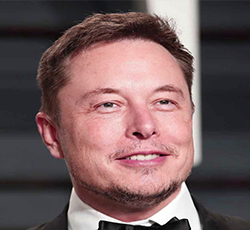



Elon Musk and Cyril Ramaphosa
CAPE TOWN â A fresh diplomatic and economic row has erupted after billionaire entrepreneur Elon Musk called for sanctions against South Africa, accusing the country of enforcing âsuper racistâ laws that block his satellite internet service, while President Cyril Ramaphosa defended the nationâs Black economic empowerment framework.
The dispute centres on regulatory requirements that have delayed the rollout of Muskâs Starlink satellite internet service in his country of birth, reigniting global debate over South Africaâs post-apartheid transformation policies.
Musk escalates criticism
In a post on his X platform on April 12, Musk claimed that Starlink had been denied a licence âsimply because I am not Black,â arguing that the countryâs ownership requirements amount to racial discrimination. He went further, calling for international sanctions if the laws are not revised.
Starlink, a subsidiary of SpaceX, relies on a constellation of low-Earth orbit satellites and is widely seen as a potential breakthrough for connectivity in underserved regions.
The criticism has drawn sharp reactions within South Africa, where policymakers argue that Muskâs characterisation misrepresents the intent and structure of the countryâs laws.
Ramaphosa defends empowerment framework
Responding to the controversy, Ramaphosa said international firms, including Starlink, have pathways to comply with local regulations without necessarily ceding equity ownership.
âInternational companies are given an opportunity through the equity-equivalence process where they can undertake alternative investments that empower previously disadvantaged communities,â he told reporters.
The president rejected claims that the laws are discriminatory, insisting they are corrective measures designed to address historical exclusion under apartheid.
âSingling out Black economic empowerment laws is quite dishonest. These laws are meant to empower,â Ramaphosa said.
Regulatory hurdles and policy divisions
Under current rules, telecommunications operators are required to meet ownership thresholds that include at least 30% Black shareholding â a provision that complicates entry for foreign firms such as Starlink.
Communications Minister Solly Malatsi has proposed extending equity-equivalence models â already used in sectors like automotive manufacturing â to telecommunications. The proposal would allow companies to meet empowerment obligations through investment in infrastructure, digital inclusion and community development.
However, the plan has met resistance within the ruling African National Congress (ANC), with some lawmakers warning it could dilute transformation goals.
Connectivity gap highlights stakes
The standoff comes as South Africa continues to grapple with a significant digital divide. According to official data, only 1.7% of rural households had reliable internet access as of 2023, underscoring the potential impact of satellite-based solutions like Starlink.
Analysts say resolving the impasse could be critical for expanding connectivity, particularly in remote areas where traditional infrastructure has lagged.
Economic backdrop: growth amid uncertainty
The controversy unfolds against a mixed economic backdrop. South Africa has shown signs of recovery, with the PayInc Economic Index rising by 0.9% in March to 104.7, placing it 4.6% higher than a year earlier. Gains have been supported by moderating inflation, wage growth and improved business confidence.
Independent economist Elize Kruger said these factors have contributed to stronger first-quarter momentum in 2026.
However, external shocks are clouding the outlook. The International Monetary Fund (IMF) has downgraded South Africaâs 2026 growth forecast to 1.0%, citing global instability linked to escalating conflict in the Middle East.
Rising fuel costs and inflation risks
The economic outlook is further complicated by rising fuel prices, with petrol and diesel costs increasing sharply in April despite government efforts to cushion consumers through levy reductions.
Kruger warned that further increases are likely in the coming months, with knock-on effects expected across transport, manufacturing and agriculture.
âIt will be impossible for companies to absorb the full extent of these increases,â she said, noting that higher input costs are already being passed on to consumers.
Broader implications
The dispute between Musk and the South African government highlights a broader tension between economic transformation policies and the need to attract foreign investment in a competitive global environment.
While proponents argue that empowerment laws are essential for redressing historical inequality, critics contend that regulatory rigidity risks deterring innovation and capital inflows.
As the debate intensifies, the outcome may shape not only the future of Starlink in South Africa but also the countryâs broader approach to balancing equity, growth and global integration.
Share this:
Please first to comment




Stay Connected
Tweets by elonmuskTo get the latest tweets please make sure you are logged in on X on this browser.