





 Energy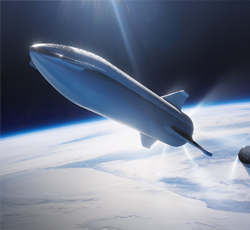


TOM LEONARD: How Elon Musk's plan to launch ONE MILLION satellites could make him the most terrifyingly powerful man on the planet


comments
Look up into the night sky and, if you can see anything up there that’s bright and moving, chances are it belongs to Elon Musk.
The world’s richest person - net worth £600billion and counting - launched his first Starlink satellites into low Earth orbit in 2019, promising that they would provide fast broadband internet to the world’s most remote places.
Travelling at 17,000 mph, some 342 miles above the planet, they take little more than 90 minutes to orbit the earth.
And seven years after those first Starlinks went up, the constellations of Orion and Ursa Major pale beside the glittering array of Musk-owned satellites that have been described as surrounding the Earth ‘like a cloud of gnats’.
This extraordinary feat has been achieved thanks to the success of his pioneering aerospace company SpaceX and its groundbreaking reuseable rockets, which have cut the cost of launching a satellite by more than 90 per cent.
Starlink’s parent company now accounts for 95 per cent of all spacecraft launched into orbit in the US and 50 per cent of the world total.
If this didn’t make his space business pretty much indispensable, his imposing satellite constellation’s ability to provide high-speed internet connections almost anywhere you care to mention has certainly done so.
As the company strikes ever more deals with governments, the number of satellites grows by the week.
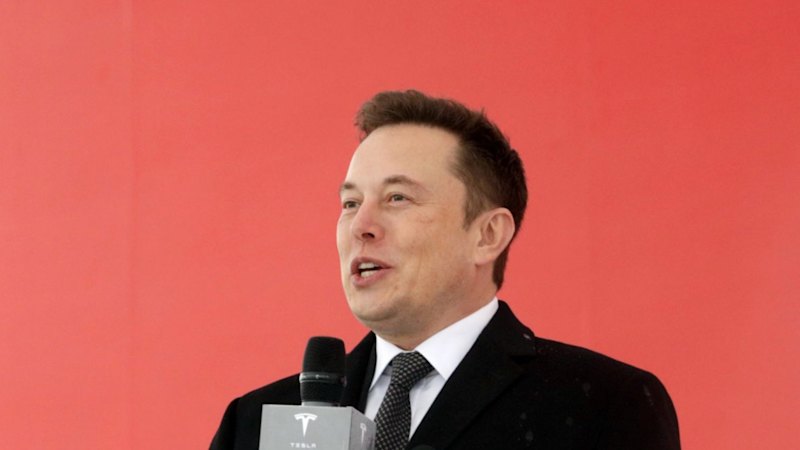
Elon Musk, the richest man in the world, owns 40 per cent of Starlink
There are now around 10,000 Starlink spacecraft up there – two-thirds of all 14,500 satellites in orbit – and he plans many, many more.
Musk, who owns 40 per cent of Starlink but 80 per cent of the voting rights, recently lodged an application with the US regulator, the Federal Communications Commission (FCC), to launch a constellation of up to a million satellites – yes, a million - that will be sun-powered orbital data centres for Artificial Intelligence computing power.
Satellites are increasingly vital in fields such as navigation, climate research and earth observation but nowhere are they more critical than when it comes to communications. And the Starlink system is as user-friendly as it gets.
All a subscriber needs is a small receiver with an electronically-controlled antenna, which automatically steers toward the satellites as they pass overhead.
The portable terminals, which are about the size of a pizza box, receive signals from these satellites and transmit them to a nearby router, which supplies the broadband internet connection.
As is being demonstrated in conflicts across the globe, especially Ukraine, Starlink has given Musk – a private citizen – geopolitical powers that many agree are historically unprecedented.
It is no exaggeration to say that it gives him the ability to change the course of wars on a whim. And the mercurial, vindictive and conspiracy theory-prone Musk has shown himself to be rather prone to whims.
Experts have long observed that whoever dominates space will have the power to oversee our lives on Earth, with the speculation initially focused on whether it would be the US or China. Until a few years ago, nobody predicted it might be a single man – least of all a man like Musk.
He has already shown himself to be alarmingly fickle. In 2022, fearful that he would be blamed by Moscow for any battlefield losses. he shut down the Starlink service to Ukrainian forces trying to launch a drone attack on the the Russian fleet at Sevastopol.
Observers are nervously waiting for the next time he decides on a similarly unhelpful intervention.
For the moment, however, Musk’s interests have largely aligned with the West’s. Ukraine, whose own satellite system was destroyed in one of the opening salvos of the Russian invasion, has come to depend on Starlink for its defence: coordinating troop movements and steering drones.
Until recently, the Russians relied on Starlink, too. Despite the service being unavailable in Russia, The Kremlin used middlemen to smuggle Starlink terminals into Ukraine in large numbers.
A SpaceX Falcon 9 rocket carrying 29 Starlink satellites takes off earlier this year
Elon Musk has 80 per cent voting rights in Starlink, which launched its first satellites in 2019
But as of February 1, Starlink terminals won’t work in Ukraine unless they are on a ‘white list’ approved by the Kyiv government.
As a result, Russia’s ability to mount attacks using drones, which need a strong internet connection, has been crippled. Commanding officers even used Starlink, which could send video confirmation of a soldier’s position, to check their own men hadn’t deserted.
Now they are forced to use military radios to control their troops, which means they have to operate much closer to the front line and so put themselves in harm’s way.
Ukrainian special forces recently told the Wall Street Journal that, without Starlink, their opponents have now been ‘basically pushed back to Cold War-era communications’.
This has transformed the conflict, resulting in Kyiv’s forces’ biggest domestic territorial gains in more than two years.
Starlink has been a crucial factor in other conflicts, too. In Sudan, rebels used the terminals to communicate with allied militias. In Iran and Venezuela, civilians have used them to get around government information blackouts or censorship. In Gaza, they’ve been used for humanitarian purposes, with doctors and aid organisations employing them to coordinate the movement of supplies and to provide online medical treatment.
As in Ukraine, Starlink is helping to revolutionise the use of cheap drones in the Iranian conflict. There, the US has been having great success with a new model called the Low-Cost Uncrewed Combat Attack System, or Lucas.
Dubbed a ‘kamikaze’ drone, Lucas is controlled by a Starlink terminal which means it can be operate over greater distances and resist Iranian jamming attempts.
It may not be the main source of Musk’s wealth – that’s still electric car company Tesla - but Starlink is his most impressive technical accomplishment and the one that has turned out to be by far the most empowering.
While originally designed to fill in gaps in the world’s internet coverage, it’s now becoming a highly competitive alternative to many existing services.
Russia, China, Belarus, Afghanistan, Syria and North Korea are the only no-go areas on Starlink’s global coverage map – everywhere else it’s either available or ‘coming soon’ (the latter area almost entirely limited to parts of Africa and Asia).
In March, Musk announced that Starlink had obtained its operating licence in the Central African Republic, meaning that it is now available in 27 out of 54 African countries.
A SpaceX Falcon 9 rocket is launched, carrying 23 Starlink satellites into low Earth orbit in Cape Canaveral, Florida in 2024
Musk has also unveiled a new service, StarlinkMobile, which will deliver direct satellite-to-handset connectivity.
Later this year, in a deal with Starlink, Virgin Media O2 is set to become the first mobile network operator to offer UK customers automatic connectivity via satellite in places without a phone signal.
The satellites will effectively act like ‘phone masts in the sky’, said a telecoms analyst, who stressed that they are the only technology ‘that can truly close the coverage gap across mountains, oceans and rural areas’.
In 2020, Musk reassured existing broadband providers – who provide the internet via cables – that Starlink ‘is not some huge threat’ to them, but they say they now know different.
Industry executive Hans Geerdes this week warned a cable industry conference that Musk’s ‘aggressive’ business behaviour – launching much bigger and more powerful satellites and engaging in relentless cost-cutting – could drive them all out of business.
This would leave Musk dominant in the field of high speed internet, offering his service not just in remote areas and war zones but everywhere.
As for his jaw-dropping ambition to launch up to a million satellites, it depends on his driving down the costs of putting them into space even further, via a huge new Starship rocket which is still in development.
His plan has – as so many of Musk’s grand plans do – attracted many objections. In this case, they go beyond the obvious environmental toll of endless rocket launches and the potential build-up of dangerous space debris, which not only provides a hazard to other spacecraft but occasionally falls to earth without burning up on re-entry.
The US government relies on Musk for everything from space missions and satellite communication to tech research and championing electric cars
Please first to comment


Stay Connected
Tweets by elonmuskTo get the latest tweets please make sure you are logged in on X on this browser.