





 Energy




(5)
It’s been a bleak few months for so-called legacy automakers’ electric plans. General Motors, Ford, Stellantis, and Honda have all taken write-downs on their respective EV programs to prevent them from hobbling the profitable parts of their business. BMW, another longtime automaker still making gas and hybrid-powered vehicles, has been a consistent EV player for years and just released one of its most important new models.
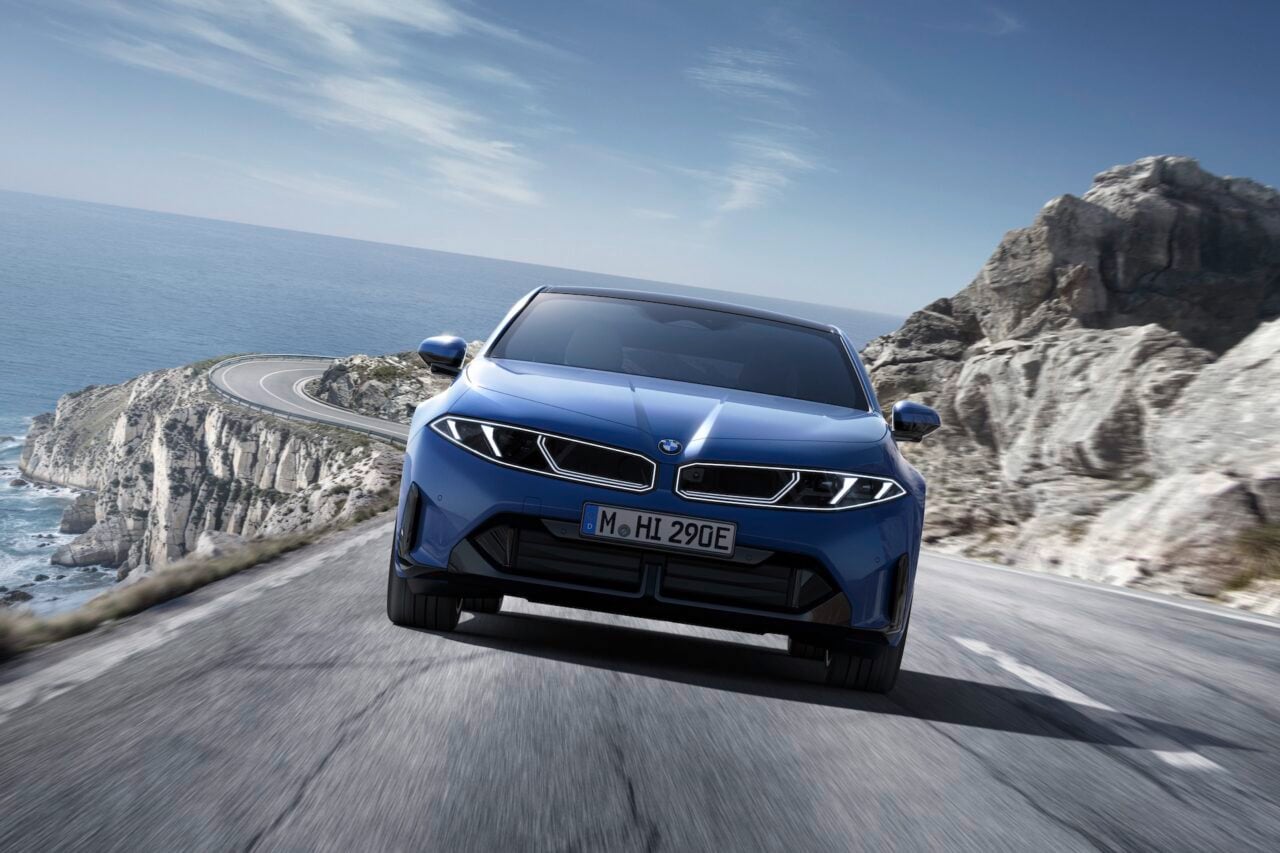
The BMW i3 was revealed in Germany on Wednesday, and the automaker emphasized the heritage of the “3” in the model’s name. That’s because the i3 runs alongside the BMW 3 Series, the sedan that many people associate with the brand, even if, underneath the skin, it will remain a very different vehicle from the gas-powered 330i for the foreseeable future.
Keen BMW or EV fans will remember the automaker had another electric car called the i3 from 2014 to 2021, but that carbon fiber-aluminum hatchback has nothing to do with this new car. The 2027 i3 is the second BMW on what it calls the Neue Klasse platform, after the iX3 SUV that’s set for U.S. showrooms in the second half of this year.
While BMW’s rivals keep rethinking their EV strategies as markets change, it has persisted with models like the i4 and i5, running alongside the internal combustion engine versions of the 4 and 5 Series, respectively. Those models, however, are based on the same platform as the gas-engined models and therefore are compromised with lumps in the floor where the mechanicals would go and reduced cargo space.
The i3, and iX3 for that matter, don’t have such compromises because the platform was built to be a dedicated EV. While it’s slightly larger than the current 3 Series sedan, the i3 is better-packaged inside for people and things and could likely approach the interior space of the significantly larger i5.
© BMW
Yes, looks are subjective, and no, not everyone will go for the increasingly complex BMW design traits of this decade. At least the i3 lacks the gigantic grille found on the i4 and iX models and, for the most part, looks cleaner than the iX3. It obviously tries to modernize the design features of classic BMWs, and it largely pulls it off.
However, the interior, which shares a lot of its layout with the iX3, will be controversial all around. A lot of vehicle functions are controlled through a center touchscreen (iDrive and its console-mounted rotary controller are dead), but a thin band at the base of the windshield shows speed, charge, other media, navigation, and vehicle information. You also have to look over the steering wheel to see it because the wheel’s spokes are at 12-and-6 o’clock, not 9 and 3. A head-up display is available.
© BMW
The i3 will initially be available as a dual-motor, all-wheel drive version with 463 horsepower and a battery with a 109-kWh capacity, along with a 15.4-kW onboard charger and peak charging at 400 kW—although good luck finding a public charger to do that speed. Single-motor versions and ones with higher and lower performance are supposedly on offer, although it’s unclear which versions will eventually find their way over here.
BMW’s aiming for 440 miles on an EPA-estimated range for the initial U.S.-bound i3s. Even being pessimistic and lowering that to closer to 400 miles would comfortably best the two-wheel drive Tesla Model 3’s 363-mile EPA rating. It might not beat a Lucid Air’s maximum 512-mile range, but that’s likely going to remain a far more expensive vehicle.
The i3 will support bidirectional charging and vehicle-to-home and vehicle-to-grid settings, although those features haven’t been confirmed for the U.S. at launch. All U.S. models, however, will come with a standard, Tesla-style NACS charging port built in, as most BMW EVs made since 2022 are supported on open Supercharger stations.
In a new car market that’s been dominated by SUVs, especially for EVs, sedans and hatchbacks could be staging a comeback. Mercedes-Benz is about to release the CLA EQ compact electric sedan this year, and the larger C-Class electric sedan will likely show up next year. Audi will follow up with an electric successor to the A4 to join the large A6 E-tron on sale now, too. And the long-running Lexus ES has already been transformed into an EV with its U.S. arrival imminent.
© BMW
BMW’s even pledging to produce an i3 wagon, which would join a very small group of electric wagons (and wagons in general, since even Volvo’s working itself out of them), but given there hasn’t been a 3 Series wagon in the U.S. since 2018, don’t hold your breath on it coming here. Do, however, expect a performance M3 (iM3? M3i?) version in the near-term, although it won’t replace the M3 you have to put gas in.
Production for the BMW i3 starts in Munich in August, with the first models reaching customers sometime in the fall. No official on-sale date for the U.S. has been announced, but expect it to land here in the first half of 2027 and, if BMW’s other i models are anything to go by, 15% to 20% more expensive than the equivalent gas-powered 3 Series, or possibly around $60,000 to $65,000 given where it would fit between the different i4 models.
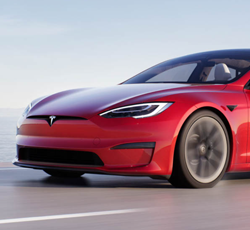
But think about the fact that by the time the i3 comes to the U.S., the Tesla Model 3 will be a decade old. Yes, it’s received some worthy range and performance updates, better interior quality, and numerous price adjustments. Even with all of that, though, it’s still broadly the same car.
The BMW i3 more than catches up to the Tesla technically, uses the new standard of an 800-volt electrical architecture, promises an exceptional range, and looks new because it is new. And now that the Supercharger network and the NACS port aren’t exclusive to Tesla, public charging is on a more level playing field than ever.
I’d be worried if I were trying to push new Teslas on people who see new EVs like the BMW i3.
Explore more on these topics
Please first to comment




Stay Connected
Tweets by elonmuskTo get the latest tweets please make sure you are logged in on X on this browser.