






 Energy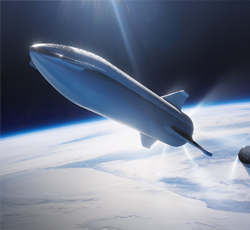





Brian Wang
NASA has changed Artemis III into a 2027 LEO (low earth orbit) rendezvous mission. There is no orbital refueling is needed at all by SpaceX.
Block 1B – the planned upgrade to the SLS rocket – is dead. No more custom builds. No second mobile launcher. NASA is standardizing the rocket so they can launch every 10-12 months instead of every 3.5 years.
This higher candence for SLS means that if SLS cannot gets its act together on hydrogen and helium leaks then it is possible SLS can get booted.
SLS has the worst launch cadence of any NASA-designed vehicle. It’s been 3+ years since Artemis I launched. The gap between Apollo 7 and 8 was just 9 weeks. You cannot build muscle memory launching once every few years.
NASA will pay roughly $4 billion per full SLS/Orion mission for both Artemis III (LEO docking test, mid-2027) and Artemis IV (first lunar landing, early 2028).
Breakdown of NASA’s SLS costs (current 2025–2026 figures).
SLS rocket alone (production + operations, recurring) is ~$2.5 billion per launch (NASA OIG and recent estimates. excludes prior development).
Full Artemis mission (SLS + Orion spacecraft + Exploration Ground Systems + mission ops) is ~$4 billion quoted repeatedly by NASA officials.
So for Artemis III and IV specifically it is Two SLS launches → ~$8 billion total spread across FY2026–2029 budgets.
This supports NASA’s new goal of 10–12 month cadence between SLS flights.
These are the same per-launch costs as before — the program restructure doesn’t magically make SLS cheaper, but it avoids extra spending on upgrades.
NASA officially canceled the entire Block 1B upgrade today (announced by Administrator Jared Isaacman). This kills development of the more powerful Exploration Upper Stage (EUS), the second Mobile Launcher (ML-2), and related Block 2 plans. This EUS development which was about $5–6 billion and new tower/ground systems had ballooned to $1.8–2.7 billion. Annual sustainment costs for the upgrade path were hundreds of millions per year.
Money reallocated to the new Artemis III (added LEO docking demo) and Artemis IV (accelerated landing) without needing a big new budget ask.
Artemis I and II (crewed lunar flyby, now NET March–April 2026) had 8 failed WDRs, hydrogen leaks, helium issues, and launch scrubs due to leaks. A clown show of leaks, WDR fails and scrubs might still be seen or they will be fixed for Artemis 3 and 4.
NASA says they could optionally rendezvous with Blue Moon Lander instead of Starship. However, Starship is the prime and just flying to Earth orbit in 2027 is something SpaceX will be able to do.
Why Starship needs zero tanker flights here
Starship (in this case the HLS variant or a test version) launches on its Super Heavy booster straight to low Earth orbit.
It arrives in LEO with plenty of residual propellant left on board — enough for
Rendezvous and docking maneuvers with Orion (or Blue Moon)
Station-keeping
Please first to comment




Stay Connected
Tweets by elonmuskTo get the latest tweets please make sure you are logged in on X on this browser.