






 Energy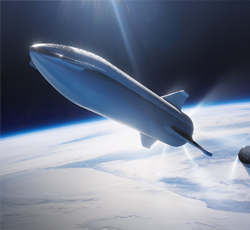


‘Absolute nightmare’: The social network where AI chatbots exchange ideas and gossip about humans
With the enlarged SpaceX not the only big AI-tinged float planned for this year – OpenAI and Anthropic have theirs on drawing boards – the market’s willingness to continue to support financial models that involve massive outlays today for uncertain returns in three, four or five years’ time will be stress-tested.
That’s why, as was the case when xAI was used to bailout investors in X (who were badly underwater on their investments), Musk has turned to SpaceX and its ability to raise a very big lump of cash – at $US50 billion, an IPO equity raising would be the biggest in history, dwarfing the $US29 billion raised by Saudi Aramco in 2019 – just to keep xAI in the game.
The industrial logic for combining Space X with xAI is thin.
Advertisement
There are not many synergies between launching rockets and operating a network of satellites, an AI start-up that lags its competitors and a controversial social media platform where the interest on its debt absorbs roughly half its revenues.
xAI’s Grok chatbot doesn’t have the users or financial backers (almost the entire AI sector) that OpenAI’s ChatGPT has, nor the distribution platform of Google’s Gemini or the corporate acceptance of a rival start-up, Anthropic (which moved markets with the release of new AI productivity tools on Tuesday).
xAI is getting a helping hand.
Bloomberg
SpaceX said it was acquiring xAI to “form the most ambitious, vertically-integrated innovation engine on (and off) Earth, with AI, rockets, space-based internet, direct-to-mobile communications and the world’s foremost real-time information and free speech platform.”
Musk himself said the rationale for the merger was that, within two or three years, the least expensive way to do AI computations would be in space.
Advertisement
He envisages putting AI data centres into space on SpaceX’s rockets and said there would be cost efficiencies that would enable innovative companies to train their models and process data at unprecedented speeds and scales.
“This marks not just the next chapter but the next book in SpaceX and xAI’s mission: scaling to make a sentient sun to understand the universe and extend the light of consciousness to the stars,” he said, whatever that means.
Maybe the future of AI and the data centres needed to support it lies in space, but Musk seems to have skated over the logistics and costs of building something in space that is already stretching, to their limits, AI companies on Earth.
The sector’s insatiable appetite for capital has outstripped the capacity or willingness of equity markets to supply it, hence the increasing levels of debt in the sector and the incestuous deals between its participants.
There is some financial logic to the combination, given that SpaceX is cashflow positive – it appears to have generated more than $US2 billion of positive cashflow last year and is on a steeply rising curve – while xAI churned through $US9.5 billion in the first nine months of last year at an annualised rate of more than $US12.5 billion.
Advertisement
It appears obvious, however, that the capital SpaceX raises in its IPO will be quickly devoured by xAI unless the industry trend of capital expenditures rising at a much greater rate than revenues can be reversed.
Related Article
Please first to comment


Stay Connected
Tweets by elonmuskTo get the latest tweets please make sure you are logged in on X on this browser.