






 Energy




— SpaceX (@SpaceX) November 15, 2023
What has caused so many SpaceX failures?
So far, these have only occurred during development flights. The Falcon rocket crashed 10 times before achieving the first soft landing. But that was eight years ago. Now, for SpaceX, recovering the lower stage of those rockets is pure routine. They have already flown 250 Falcons, with a failure rate of less than 5%, almost all concentrated in the first stage. Thirty-nine first stages are continually recycled on successive launches. One of them has been reused on 18 occasions. The economic advantage of this over other companies’ disposable rockets is obvious.
Is it reasonable to suffer so much failure?
SpaceX claims to follow a “design, test, fix, and repeat” philosophy. It is a private company that can afford to accumulate failures to accelerate development. From each one, conclusions are drawn that allow mistakes to be corrected until the final product is reliable - so reliable that it has already been entrusted with the launching of astronauts and even the U.S. Department of Defense has contracted SpaceX to put military satellites into orbit.
The case of NASA is diametrically opposed. It operates with federal funds and therefore cannot afford any failure if it does not want to see its yearly budget compromised. However, it takes years and years for NASA projects to materialize; and it is rare that they are executed within budget.
What improvements has Starship incorporated for this second launch?
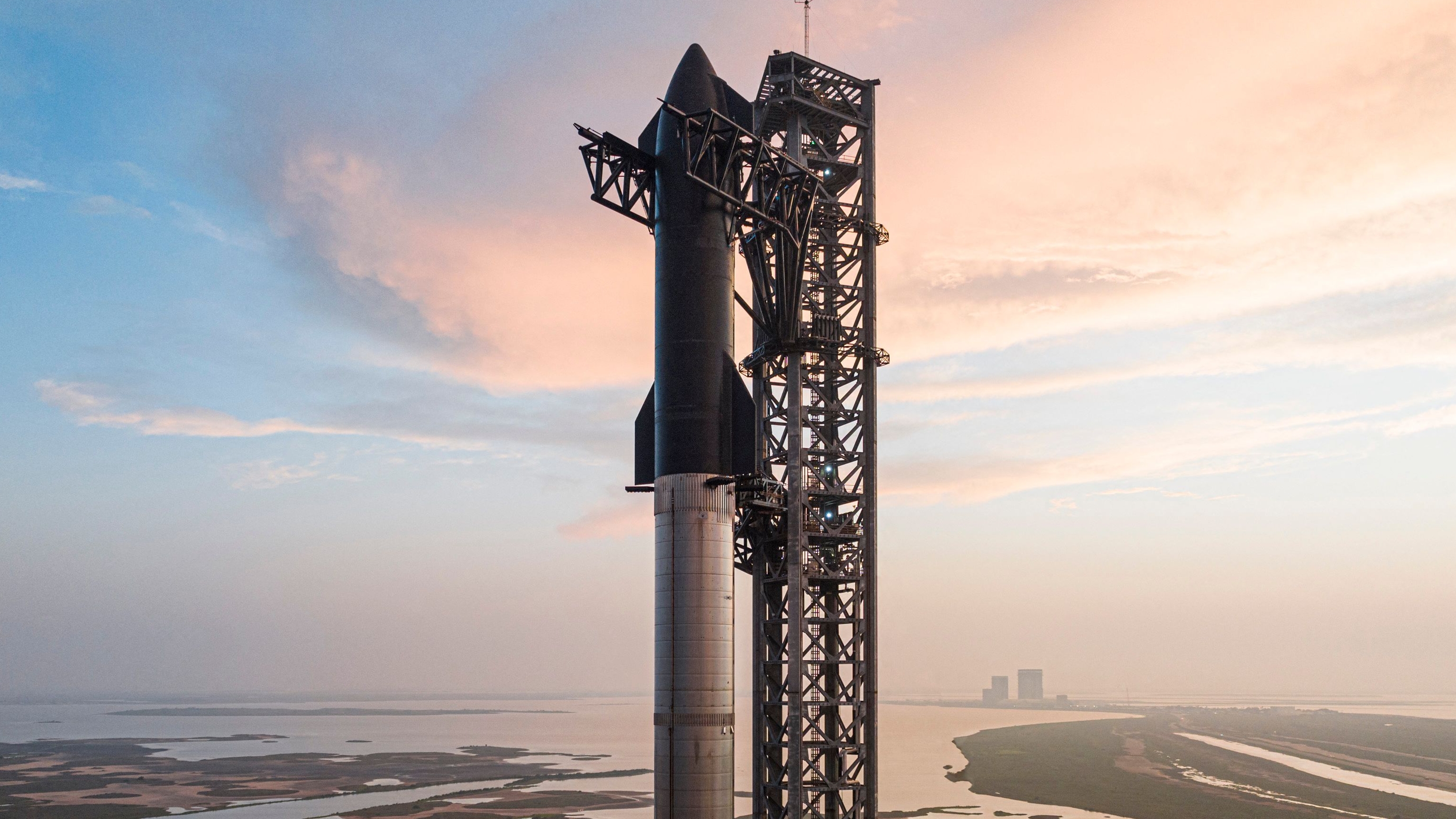
First and foremost, the installation of a water-cooling system for the platform, which is basically an upside-down shower, which throws up a waterfall just before engine ignition. That should protect the concrete and, at the same time, absorb some of the brutal acoustic energy it gives off.
The decoupling system for the two parts of the rocket (the upper and lower stages), which did not work last time, has also been redesigned. The idea is for it to separate spontaneously by opening the clamps that join the two stages, rotating the rocket on itself and letting the centrifugal force itself separate the lower stage, which will already be almost empty of fuel and, therefore, very light.
In any case — and in case the theory doesn’t work in practice — the ring connecting the two segments is a new design, perforated with large vertical grooves. If the separation fails and the upper stage engines are nevertheless started, the gases will escape through it. This system has been used by the Russians on their Soyuz rockets for three-quarters of a century.
The limitations of a test flight
If all goes well, Starship will complete a trajectory with such a low perigee that it will fall before completing a single circuit of the Earth. It should crash into the Pacific Ocean near Hawaii without a controlled landing being attempted. Although both stages of the rocket will be recoverable in the future, on this occasion neither will be rescued. For now, the main interest is to see if the rocket lifts off smoothly and its payload completes almost one orbit.
The loss of the two parts of such a complex vehicle is part of SpaceX’s plans. At its Boca Chica factory, the company is producing Starships almost on an assembly line basis. The one on the launchpad now is number 25 and its booster is number 9. They are made from stainless steel, not exotic alloys, and their Raptor engines use many parts (e.g., the turbopump) that are 3D printed, reducing both their cost and assembly time. SpaceX claims to be producing one Raptor a day, valued at $250,000; 50 years ago, each F-1 engine powering the Saturn 5 rocket on the lunar missions was worth $15 million (at the time) and was produced at a rate of 10 or 12 a year.
The next step, if this test is a success, is not yet clear. SpaceX is a private company that does not disclose many details about its plans, as many are trade secrets. However, it has a commitment with NASA to develop the lunar landing spacecraft — based precisely on the upper stage of the Starship rocket — for the Artemis missions scheduled to land on the Moon from 2025 onwards.
To make that future lunar mission a reality, SpaceX will first have to achieve in-orbit refueling, a maneuver never tested on the scale involved in refilling the tanks of a Starship. As such, Musk’s immediate plans are likely to go along the lines of first reaching orbit and then testing refueling. That would mean at least two or three more launches of his mega-rocket. Perhaps as early as next year.
Sign up for our weekly newsletter to get more English-language news coverage from EL PAÍS USA Edition
Tu suscripción se está usando en otro dispositivo
¿Quieres añadir otro usuario a tu suscripción?
Please first to comment





Stay Connected
Tweets by elonmuskTo get the latest tweets please make sure you are logged in on X on this browser.