




 Energy





0:00 / 0:00
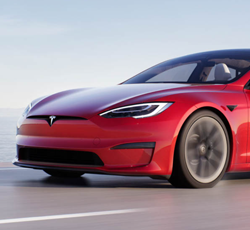
The 2024 Lucid Air Sapphire and Tesla Model S Plaid are so evenly matched, you could mistake them for the same car on paper. Both EVs use three motors to crank out four-digit horsepower figures, claimed sub-two-second 0-60-mph times, and advertised three-digit top speeds that start with a 2. They both cover roughly 400 miles in EPA testing and their fast-charging capabilities make interstate road trips possible. Even the names on the tire sidewalls—Michelin Pilot Sport 4S—are the same. Scan our specs at the end of this story and there's just one line that doesn't match up: Price.
No one should be surprised that a car called Sapphire costs more than one named Plaid, but the $158,870 chasm between the starting price of a Model S Plaid and an Air Sapphire can't be explained away with logic. If Lucid had its way, we'd be comparing its new 1,234-hp crown jewel to a Ferrari or a McLaren or a used MiG fighter—really anything that would make the $250,500 price look reasonable while showing off the Sapphire's unrelenting acceleration, carbon-ceramic brakes, brilliant chassis tuning, and lavish interior. Problem is, we can't look at a Sapphire without thinking about the car that made the same claims back in 2021. Call us basic, but we like our apples compared with apples.
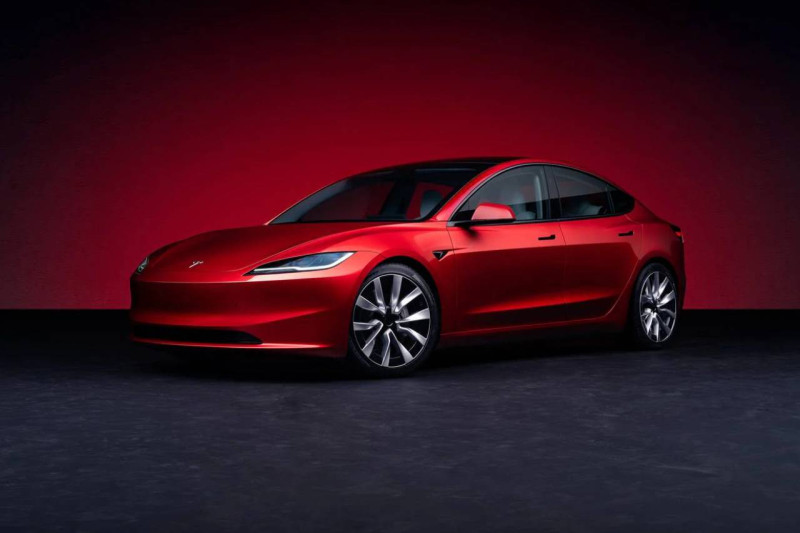
Tesla declined to provide a Model S Plaid for this test so we borrowed a meticulously maintained 2022 model with less than 10,000 miles on the clock from a reader, Jeremy at racing organizer DriveNASA. Don't get hung up on the model year. They sell new Plaids with the same tires, brakes, and 1,020 hp as Jeremy's for as little as $91,630 today, a roughly $40K discount from when the car first went on sale.
Can the Lucid with its similar performance claims possibly be worth 2.5 times as much as the Tesla? Well there is another key distinction between these two that doesn't show up in any of the specs: How they drive. After blasting down an airport runway, wringing around our figure-eight circuit, snaking through California valleys, and logging long highway drives, we can report that there's far more to this match up than price.
See All 54 Photos What Happens When the Road Turns
The Air opens a far bigger gap on the Model S in real-world driving. The Tesla starts at a disadvantage just by virtue of its steering yoke. Originally standard equipment when the Plaid launched, the yoke is now a $1,000 option, which suggests early buyers came to the same conclusion we did. After living with it for three days, we still couldn't reliably execute hand-over-hand parking-lot maneuvers without grabbing a fistful of air.
If you dare to drive the Model S at its limits, the missing upper rim is frankly dangerous. The Plaid oversteers under braking, in corners, and on the throttle, which makes it a handful to hustle around our figure-eight circuit. Experienced drivers will have to unlearn everything they know about driving dynamics and only brake or accelerate with the front wheels pointed dead straight. Anything else provokes a drift and with the yoke there's no guarantee you'll catch every slide.
This is not a serious car for serious performance driving. After just two laps of our figure-eight course—less than a minute of hard driving—the Plaid warned that the brakes were getting hot. Two laps later, it bleated a more dire warning: "Critically high brake temperature detected."
The knife-edged limit handling, the overmatched brakes, and the yoke's alien shape eat at a driver's confidence even at a sane pace on public roads. You end up driving the Plaid into corners at relatively low speeds and letting the 1,050-lb-ft tower of torque yank you out once you've exited the turn.
The yoke does feed a surprising amount of granular road texture and feedback to the driver, not just for an EV but for any modern car. The flip side is that the Plaid has a tendency of letting the road steer the car rather than the driver. The front tires follow grooves and cracks with religious zeal. They're also noisy. The Model S's ride is comfortable, but it's tainted by constant road sizzle and impact thumps along with the constant din of wind rushing over the frameless glass.
The Plaid is the Dodge Challenger Hellcat of EVs. It's outrageous, hilarious fun to overwhelm your senses and scare your friends senseless. But just like the movieSpaceballsthat provided the inspiration for the name Plaid, the madcap Tesla isn't nearly as funny after you've experienced it a dozen times. Without the chassis and brakes to match its 1,020 hp, the Tesla Model S Plaid is a party trick on wheels.
If Tesla has built a battery-powered Hellcat, the Sapphire is the Porsche 911 GT2 RS of four-door EVs—effortlessly fast, exquisitely balanced, and unapologetically expensive. The analogy has nothing to do with the numbers. The Sapphire's 1.05 g of cornering grip and 109-foot stop from 60 mph are in line with what the Plaid pulls. But it moves like a Porsche in the way its 1,430 lb-ft of torque never overpowers the chassis or brakes. Every dynamic attribute of the Sapphire works in harmony, setting the benchmark for driver engagement among EVs. And yes, we remember that the Taycan exists.
The contrast with the Model S is stark. The Air rotates as much or as little as you want, obediently following the driver's intentions. Trailbrake it into a turn and the nose points to the apex. Squeeze the accelerator early and you'll sense the two rear motors divvying up torque to help steer the car around the back half of the curve.
We ran 10 laps of our figure-eight in the Air with no signs that the tires or brakes were at risk of melting down. The best, a 22.6-second heater, puts the Sapphire in the same league as the 2017 Ford GT, the 2016 Ferrari 488 GTB, and the 2023 Chevrolet Corvette Z06 convertible.
Despite such capable company, the Air Sapphire isn't a like-for-like substitute for a quarter-million-dollar exotic. It achieves that lofty lap time largely on the strength of its three-motor, 1,234-hp powerplant shortening the straights. That much shove also makes the Sapphire's 5,335 pounds feel a half-ton lighter—even lighter than the 4,832-pound Model S—on canyon roads, just don't let Lucid convince you it's as spry as a supercar. As precise as its steering and handling are, the Sapphire doesn't replicate the fidelity and feeling of a two-door, mid-engine hero.
That's probably for the better. Engineers stiffened the Air's bushings, steel coil springs, and rear anti-roll bar during the Sapphire's development without compromising this big sedan's prowess as a grand tourer. The ride is just as supple as in Lucid's more touring-oriented trims and the cabin is just as serene.
See All 54 Photos
Please first to comment


Stay Connected
Tweets by elonmuskTo get the latest tweets please make sure you are logged in on X on this browser.