





 Energy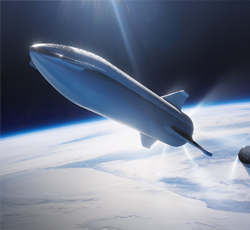




Next >>
Historically, space exploration has been tied to high cost and high complexity, making commercial space prospects unrealistic in the past. The Space Shuttle was the first partially reusable vehicle, but between recovery and reuse, reusable vehicles take roughly 60-70 days of cash-burning maintenance and refurbishment.
That makes it hard to unlock space at economies of scale. To make it even remotely thinkable, you need full and rapid reusability, implying complete recovery of all rocket stages, that too in a cost-effective manner, and a duration of about 24 hours between recovery and reuse. This is what SpaceX is trying to achieve with its Starship program after it already achieved cost-effective partial reusability with Falcon 9.
The Starship program moved one step closer to its goal when, on October 13, SpaceX successfully conducted a test flight and recovered the booster rocket, with its Mechazilla launch tower catching it with its two arms when it returned to land. The company planned to capture the upper stage (the starship itself) with the Mechazilla feat in early 2025, but test flights in 2025 so far did not aim for that.
SpaceX isn’t counting on it for its survival. The company, already valued at $210 billion as of mid-2024, while eying a $400B valuation in 2025, has sustainable streams of revenue from its Starlink constellation program and Low-Earth-Orbit (LEO) missions.
It’s safe to say SpaceX has no real competition and virtually owns the space industry because of its exceptional operational efficiency delivered through cost-efficient partial reusability, larger rockets, and vertical integration, with the biggest factor being the nailing down of self-landing and partial reusability.
Moreover, SpaceX’s high launch cadence enables it to spread out operational and maintenance costs more efficiently as well. Frequent launches mean that fixed costs, like labor and infrastructure, are amortized over a high number of missions, driving down the cost per Kilogram.
These factors have allowed it to lead the market in pricing. As of 2022, data by CSIS Aerospace Project, Falcon 9 and Falcon Heavy offer the lowest cost per Kilogram of payload to LEO, with Heavy costing $1,500 per KG as of 2018 and Falcon 9 costing $2,600 per kg as of 2010. For perspective, two rockets by other competing companies – Minotaur IV and Electron – cost $30,500 and $23,100 per kg as of 2010 and 2018, respectively. If the company realizes its Starship program, the high reuse could bring the cost down to an estimated $10-20 per kg. These factors put the company in a position so dominant, it can effectively decide its own margins.
The difference leads most customers to SpaceX. The analytics firm BryceTech reported that in H1, 2023, SpaceX launched over 80% global payload into orbit. Independent estimates suggest the share has reached approximately 90% by the year end, like Musk had projected in May 2024.
For the rest of the industry, the challenge is to compete with a company that is virtually the industry. Some companies are consolidating their position in the industry first in very narrow domains relatively untapped by SpaceX, like smaller rockets for test flights and responsive missions, or rockets optimized for certain orbits like GEO. Other companies, like Blue Origin, are trying to take on SpaceX head-on. Although there are a lot of obstacles to that, the ultimate one is the cost. Blue Origin now claims its New Glenn costs about $68 million per launch (close to cost‑parity with Falcon 9, while offering twice the payload), though its first booster landing attempt failed.
While the stars are perfectly aligned for SpaceX, many companies in the rest of the industry are struggling. Space is capital-intensive with a higher burn rate than most industries. Many startup companies that went public have been struggling to break even, trading at a lower price than their initial listing price and receiving delisting notices.
The investment in the industry was also in decline. According to data by Crunchbase, space received a significant capital boost in 2021 like most other tech industries, with venture capital investment in space startups increasing by 266% from the year prior.
It fell by 24% in 2022 in the wake of interest rate policy tightening, and in 2023, capital inflow declined by 54%. However, according to Space Capital, the industry has made a recovery in 2024 with 30% year-over-year capital growth.
With the strategic policy-easing measures, the space industry might get the thrust it needs to skyrocket once again as if it was 2021. ARK’s ETF ARKX exposed to space companies is up 78% since September 18, 2024, when the Fed made its 50 basis-point cut.
If you want exposure to SpaceX, you can look into ARK Venture Fund ARKVX. SpaceX makes up 12% of the fund’s portfolio as of July 2025. With all these things in mind, let’s head to the list of space stocks that analysts are bullish on.
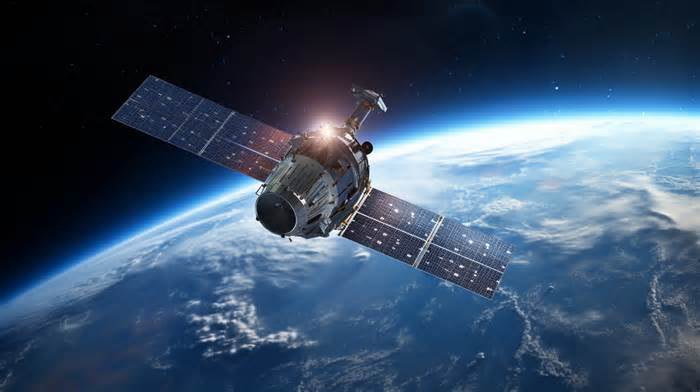
A satellite in the night sky, glimmering with the promise of aerospace exploration.
Our Methodology
For our list, we sifted through ETFs and narrowed down to space stocks that were either pure-play or significant in the space industry. We then ranked these stocks based on the number of hedge funds holding stake in them as of Q1, 2025.
Why are we interested in the stocks that hedge funds pile into? The reason is simple: our research has shown that we can outperform the market by imitating the top stock picks of the best hedge funds. Our quarterly newsletter’s strategy selects 14 small-cap and large-cap stocks every quarter and has returned 373.4% since May 2014, beating its benchmark by 218 percentage points (see more details here).
10. Redwire Corporation (NYSE:RDW)
Please first to comment



Stay Connected
Tweets by elonmuskTo get the latest tweets please make sure you are logged in on X on this browser.